Carolina Uccelli
I am writing this from Naples, where I am currently rehearsing Mimi at the legendary Teatro San Carlo. It is really one of those cities where history is everywhere!
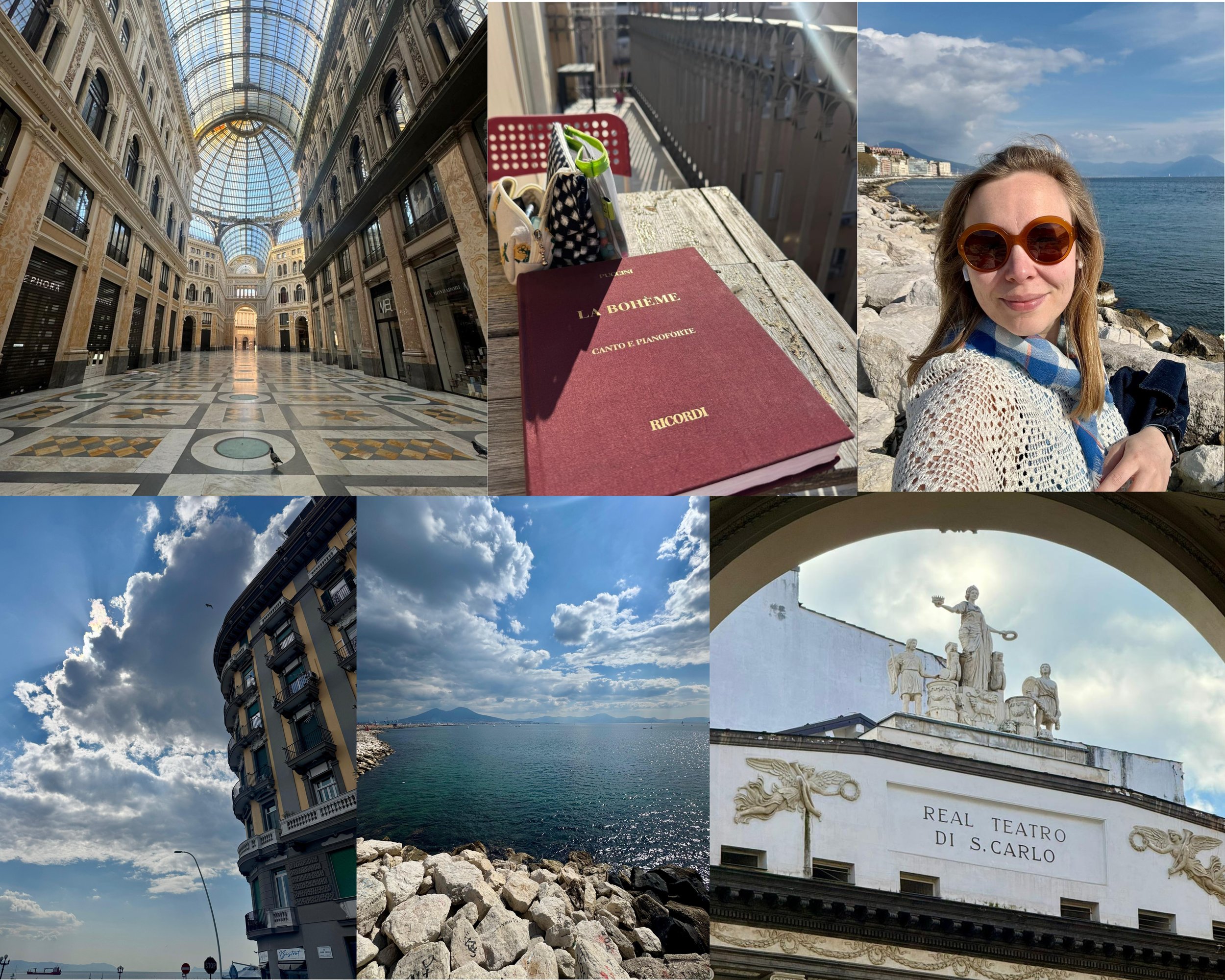
Some of my photos from Napoli: Galleria Umberto I, studying La Bohème on my balcony, sunshine over the bay of Vesuvius and the iconic Teatro San Carlo.
As I was doing some research about Carolina Uccelli, a female composer I recorded on my upcoming album, I realised I was in the very city where she created her opera and that it was even performed at the Teatro San Carlo, where I am preparing to sing Mimi in La Bohème at the moment! I love those kinds of coincidences, and I found it quite moving to think that I am standing in the same place she stood, almost two hundred years ago.
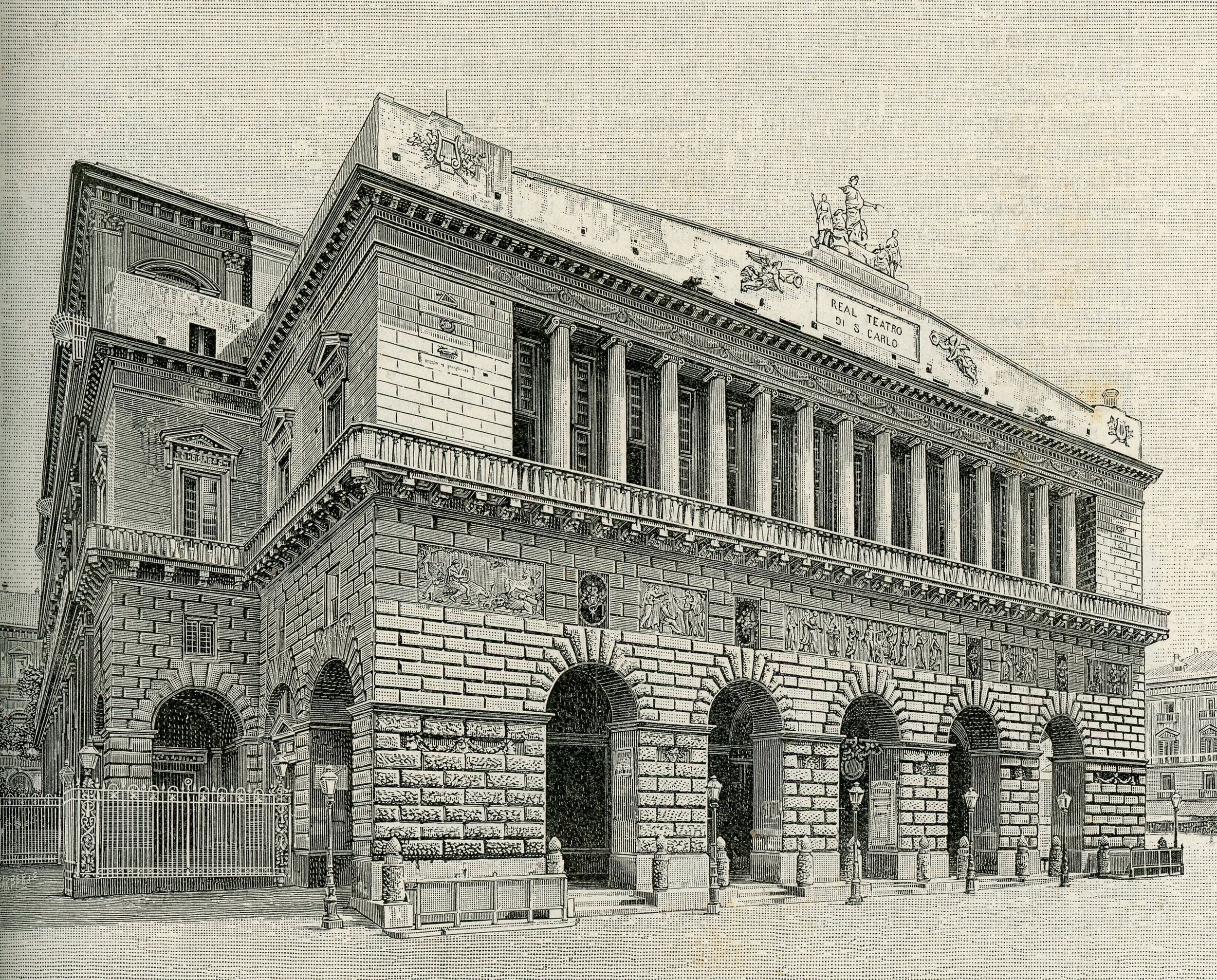
Teatro San Carlo Napoli
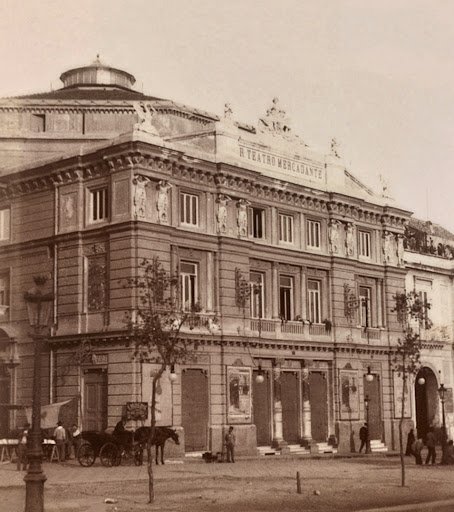
Teatro del Fondo (Teatro Mercadante)
On the 26th of September, at the San Carlo, Donizetti premieres Lucia di Lammermoor. The cast is extraordinary: Fanny Tacchinardi-Persiani in the title role, the tenor Gilbert Duprez, the baritone Giorgio Ronconi. The audience recognises something historic. Within months, Lucia will begin its conquest of every major stage in Europe.
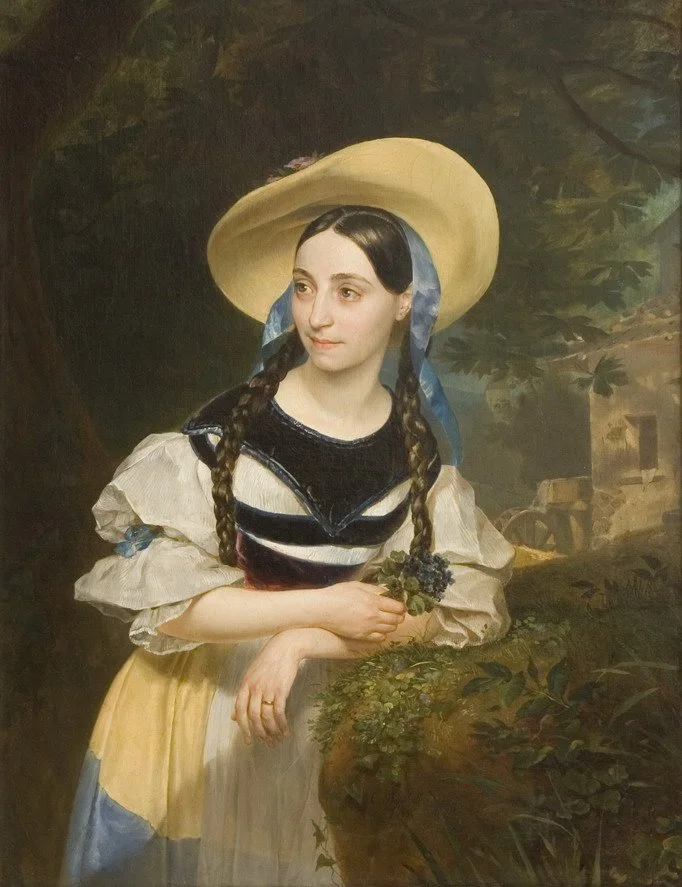
Fanny Tacchinardi-Persiani (1807-1867)
In the autumn of 1835, Naples is the centre of the operatic world. The city has two great theatres: the Teatro San Carlo, one of the most prestigious stages in Europe, and the Teatro del Fondo (today called Teatro Mercadante), its smaller but equally serious neighbour, just a few streets away. That season, both houses are running simultaneously.
A few weeks later, at the Teatro del Fondo, another opera opens. Also set (as Lucia di Lammermoor!) in medieval Scotland. The cast is equally remarkable: Tacchinardi-Persiani again, Napoleone Moriani, Giorgio Ronconi. The composer is twenty-four years old, Florentine, and a woman. Her name is Carolina Uccelli, and the opera is Anna di Resburgo.
So we have two composers, the same city, the same autumn, the same dramatic landscape. One had already written over fifty operas and was at the absolute peak of his reputation. The other was twenty-four years old, presenting only her second work.
Anna di Resburgo received four performances, then a fifth at the San Carlo. And then silence. A silence that would last a hundred and eighty-nine years!
Who was Carolina Uccelli?
She was born in 1810 in Florence, into a family of minor nobility. A child prodigy, recognised as a teenager for her piano improvisations, her singing, and her early compositions. For a young aristocratic woman, musical training was not unusual. What was unusual was the scale of her ambition. She didn’t want to write the small salon romances expected of women of her milieu. She wanted to write opera!
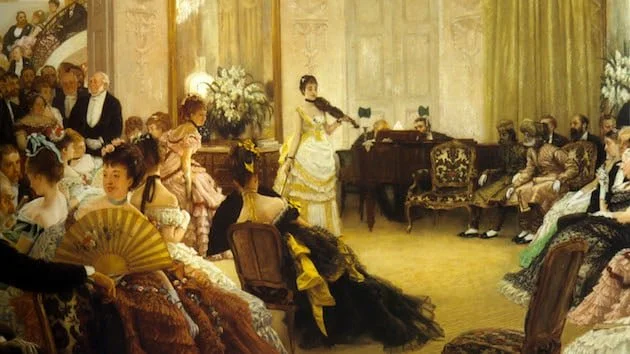
Florentine Music Salon, 1820s–1830s, painting by James Tissot
Around 1827 she married Filippo Uccelli, a prominent physician and professor from Pisa who supported her work, which was far from a given at the time.
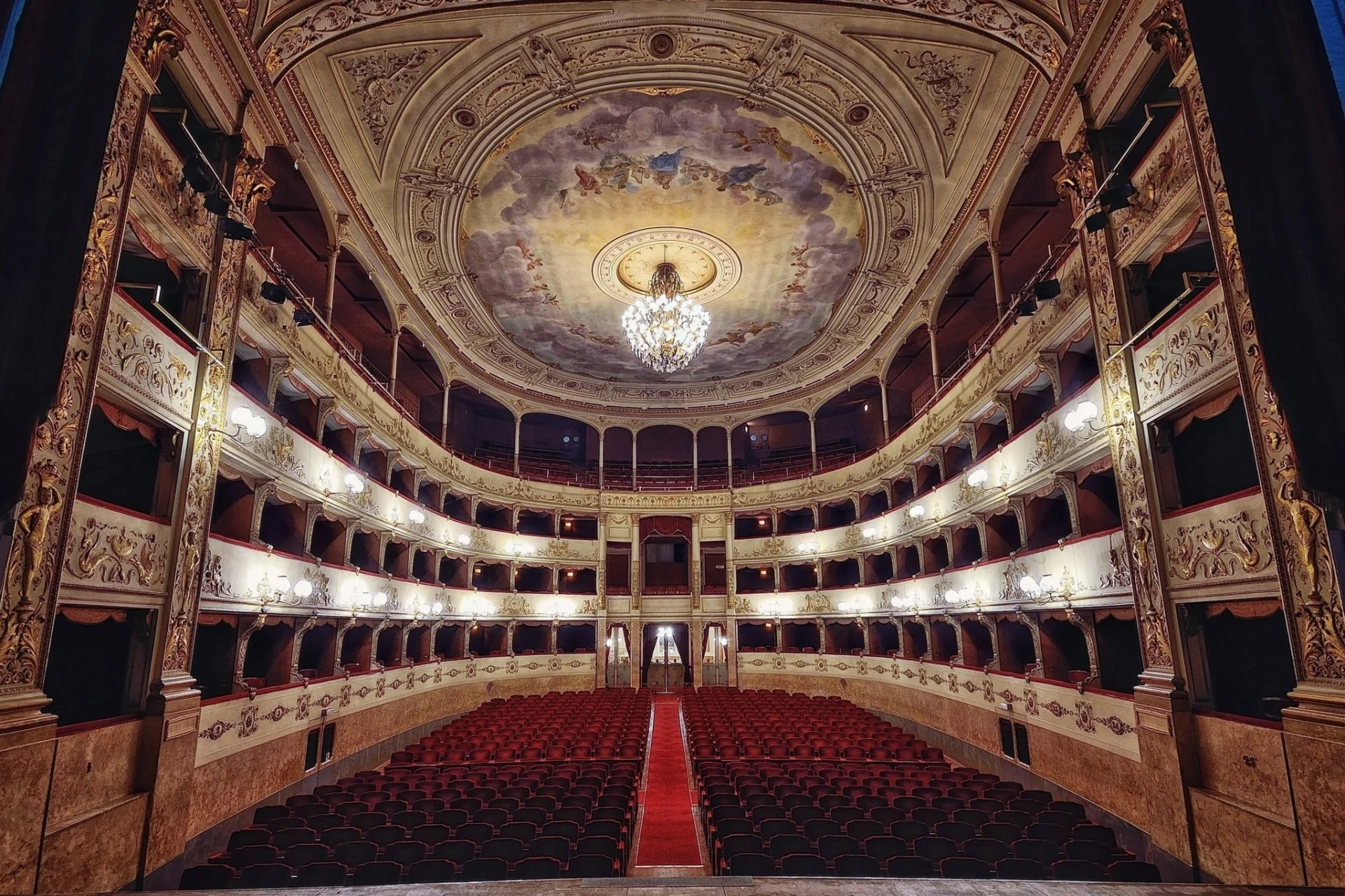
Teatro della Pergola, Florence
In 1830, aged twenty, she made her debut as a composer at the Teatro della Pergola in Florence with Saul, a sacred opera for which she wrote both libretto and music. Rossini attended the premiere and wrote to praise its “richness of ideas” and its “expressiveness and elegance in declamation and melody.” Mayr (Donizetti’s own teacher) read the score of her next project and wrote to encourage her as well.
I say “wrote to her”. But in fact, the letters were addressed to her husband. But that, as they say, is another subject!!…
Anna di Resburgo
The opera is set in a fictional medieval Scotland. Anna is the wife of a wrongly accused nobleman, waiting alone for the truth to be restored. Her husband Edemondo has been driven into exile, falsely blamed for his own father’s murder. Anna remains with their young son, in a country where his name is disgraced. It is in this extreme solitude that she sings: Sulle rupe triste e sola. Alone, on a sad and desolate cliff.

Caspar David Friedrich: "Woman Before the Rising Sun" (c. 1818–1820)
Uccelli composed this opera between 1833 and 1835, in the years immediately following her husband’s death. She was writing a woman who waits, who holds on, who refuses to disappear at exactly the moment in her own life when she had every reason to do the same. Perhaps this is not a coincidence ...
The forgotten manuscript
The manuscript disappeared into the Neapolitan archives after those five performances. Uccelli’s name survived in a handful of music dictionaries, copied from one encyclopaedia to the next without fresh research. For a hundred and eighty-nine years, no one heard her music.
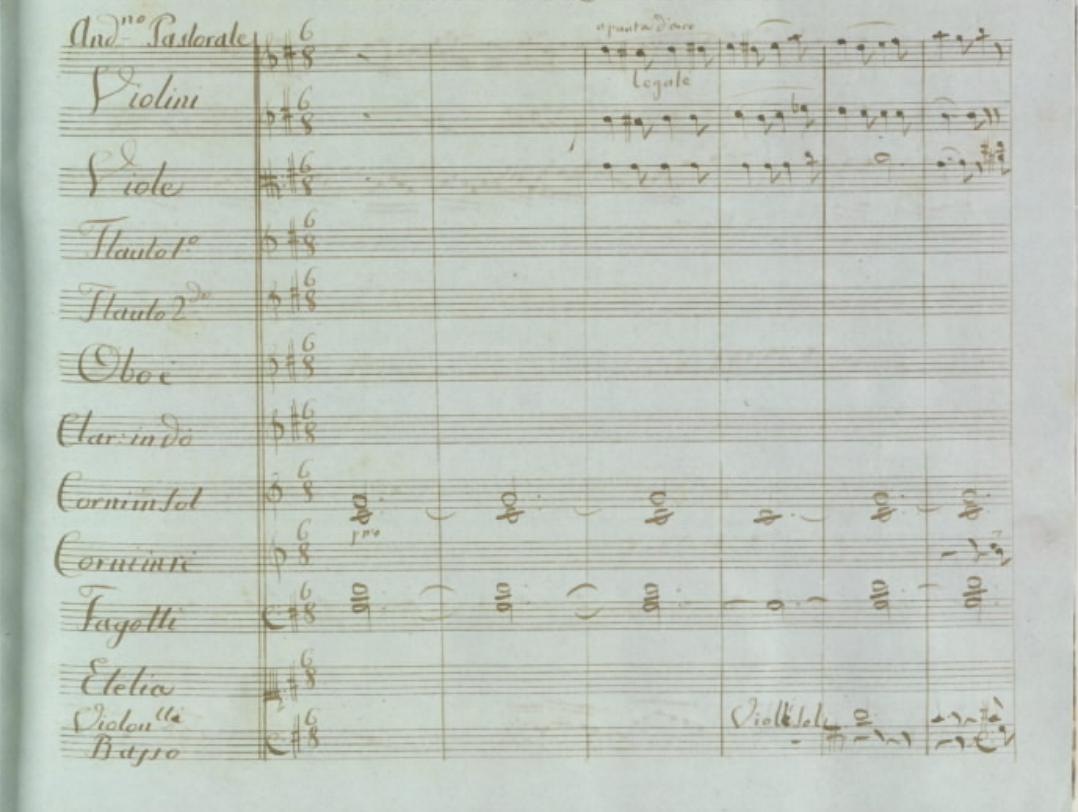
Anna di Resburgo original manuscript- Carolina Uccelli
In 2024, Will Crutchfield — founding director of Teatro Nuovo in New York — located the original manuscript and mounted the first modern production, at Lincoln Center. OperaWire wrote that it was not hard to imagine what her fourth or fifth opera might have been…
Why I wanted to record her…
When I chose the pieces for Invocation, I didn’t yet know the full story. What drew me in initially was a simpler curiosity: how would a woman compose in the bel canto style? A style so completely shaped by three men: Rossini, who invented the language, and Donizetti and Bellini, who brought it to its peak. What does it sound like when someone writes from inside that tradition but as an outsider ?
And I am really grateful I got the chance to discover this voice, thanks to the great job of the musical team behind this album.
And perhaps that is what an invocation really is at the end. Not raising the dead. Just reaching out a hand, and letting something pass through: an emotion, a call from somewhere deep, or a forgotten voice like Uccelli’s finding its way back into the room?
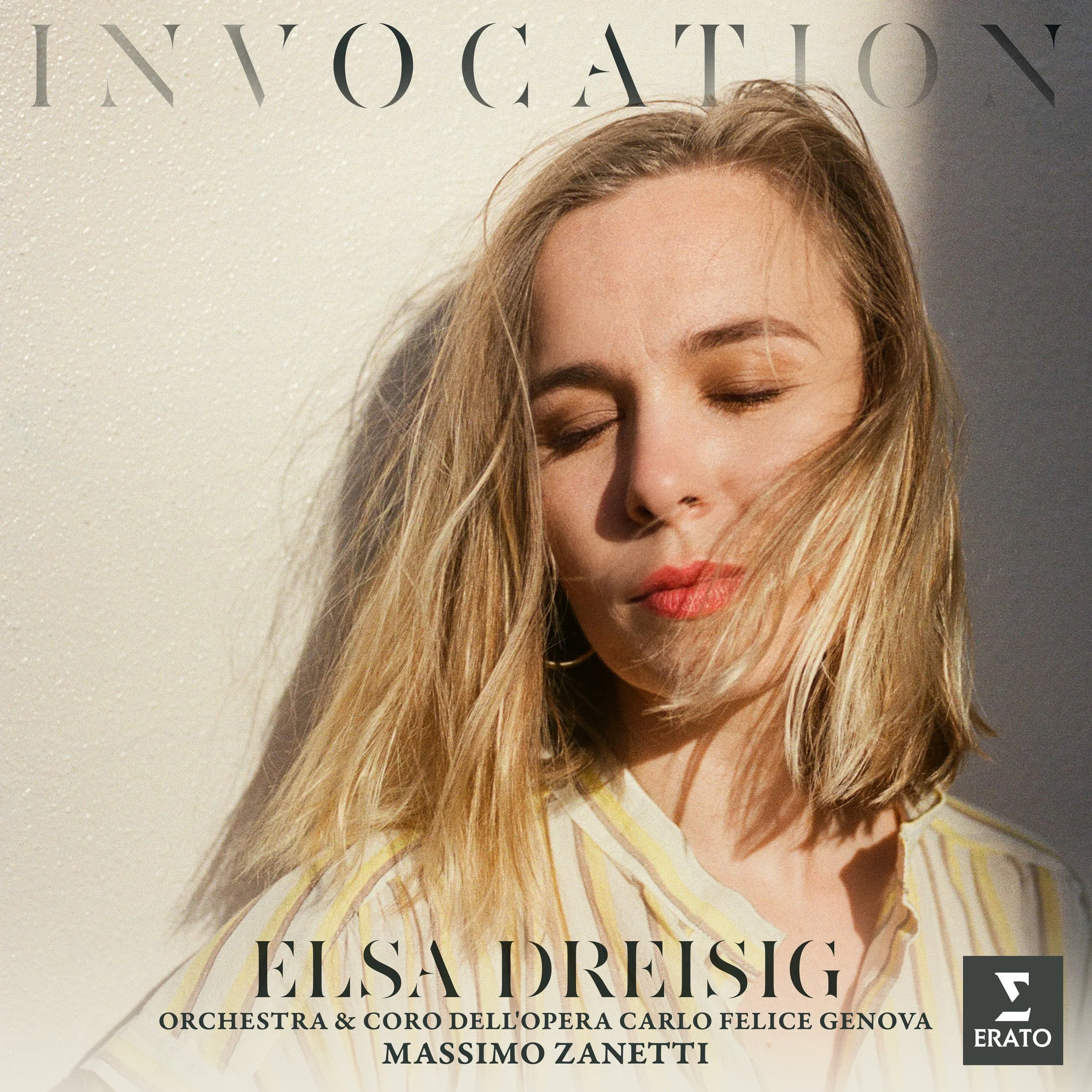
INVOCATION IS RELEASED ON THE 3RD APRIL!